
Marmagne – Les Bituriges Wind Farm
28MW
Installed capacity
435MWH/Year
Annual Production
10.3Households
Equivalent to the consumption
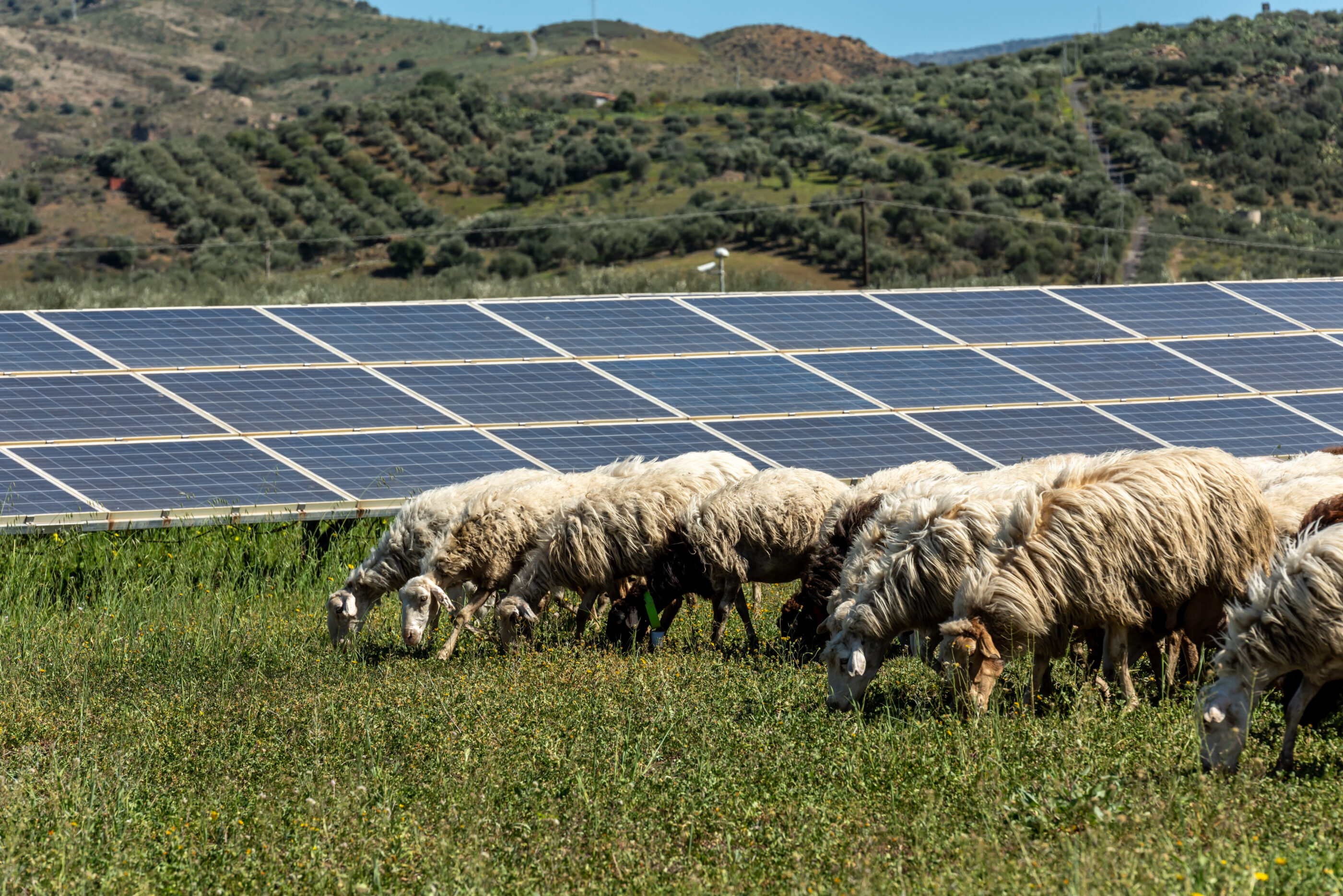
We’re developing an agrivoltaic farm project in the municipality of Marmagne, in the Cher region of central France. The aim of this project is to generate renewable electricity through solar PV, while maintaining agricultural activity, with sheep farming and crop cultivation remaining the priority.
In the long term, the site could produce 435MWh of electricity per year, equivalent to the consumption of 10,300 households. This agrivoltaic farm project therefore contributes to the decarbonisation of France’s energy mix, and to its food and energy sovereignty.
The proposed site has been a farm since 1982 and was taken over in 2019 by farmer, Elise Korcaba. In order to diversify her activity, Elise chose to develop an agrivoltaic site and in 2022 we held initial discussions regarding the possibility of delivering the project.
Environmental, agricultural and technical studies have been carried out to better define the local challenges and analyse the feasibility of the project. Its area extends over approximately 36 hectares of fields, including some that have been left fallow due to their low agronomic value for large-scale crops.
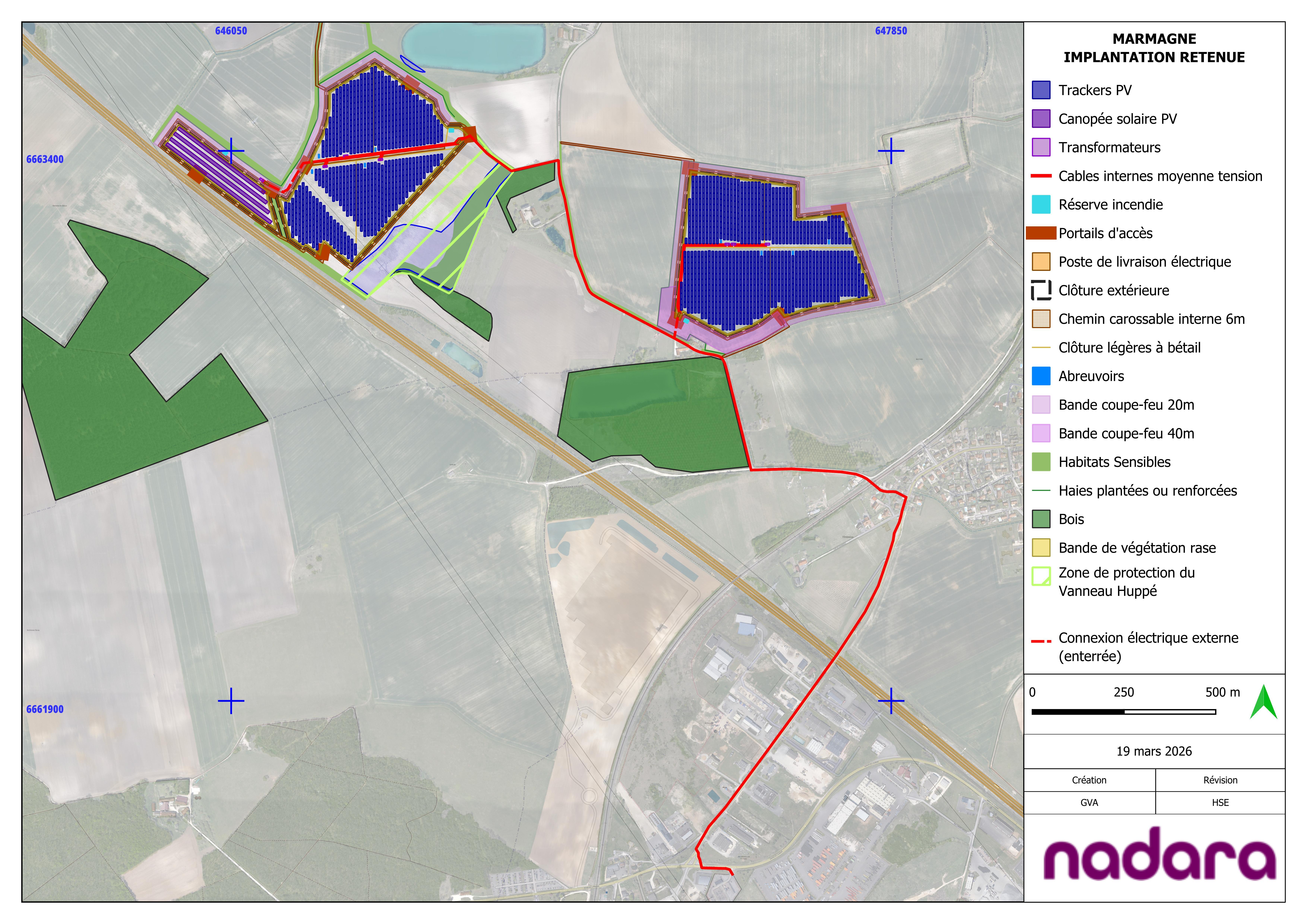
The site’s layout has been co-developed with the farmer to create a space that is accessible and easy to use, and is divided into two parts:
- A 3-hectare cultivation area with agricultural canopies. These crops will contribute in part to feeding the animals, in addition to grazing. Each row of PV panels will be spaced 18 metres apart, allowing for crop growth and the passage of farm vehicles.
- A 33-hectare livestock area with panels mounted on trackers. Each row of panels will be spaced 9.5 metres apart, allowing for the movement of animals and agricultural machinery if needed.
During the studies, certain constraints were taken into account, leading to modifications to some aspects:
- Avoidance of an area to preserve Northern Lapwing habitat
- Avoidance of all wetland areas
- Avoidance of reed beds, a favourable habitat for amphibians and bats
- Avoidance of fallow land favourable to birds living in open habitats
- Planting of 1,800 linear metres of hedgerows
The origin of the project lies in the desire to enhance the value of the farm through diversification. The new site would make it possible to reintroduce livestock activity that was previously present on these lands, and to better make use of plots that now provide only low yields. It would also enable the hiring of an employee without putting the economic balance of the farm at risk - with sheep farming allowing for the long-term consolidation of this role.
This diversification of production, and therefore of sources of income, can make the farm more resilient to the volatility of cereal prices and input costs, and also to climate change and its impacts on farming in so-called ‘intermediate’ regions.
Mixed systems combining arable farming, livestock, and renewable energy production are - more than ever - at the heart of the agroecological transition, due to their economic, agronomic, and environmental benefits. They respond to societal expectations for high-quality local food and bring many benefits, including the diversification of production, improvement of soil fertility, better carbon sequestration, reduction in the use of chemical inputs, and job creation.
Indicative project timeline
- 2023 - Initial discussions on the project
- 2024 - Launch of studies
- 2025 - Presentation of technical and environmental studies
- 2026 - Submission of the project to the Prefecture & Public consultation
- 2027 - Obtaining the building permit
- 2029 - Construction and commissioning
Local impact
We make every effort to establish a long-term relationship of trust with the stakeholders in the territories that host our installations. At every stage of the life of our sites, we work closely with all our partners to ensure stronger local integration of our activities, while sharing the value created within the territory.
In the Cher region, we already offer a range of initiatives for the municipalities that host our installations (Lazenay, Mareuil-sur-Arnon, Poisieux, Sainte-Thorette), from which Marmagne and its residents will also benefit:
- Annual call for projects to support initiatives led by the municipality or local associations (in the fields of environmental and/or social sustainability);
- Financial support for students and/or individuals undergoing career transitions in the renewable energy and sustainable development sectors, who are originally from or live in the municipality hosting the project;
Other initiatives can also be developed together with local residents and stakeholders.
Like the majority of Chambers of Agriculture in France, the Chamber of Agriculture of Cher requires that agrivoltaic projects contribute to funding actions for local agriculture. Nadara will of course contribute to this.
The agrivoltaic farm will also make it possible to diversify the activity of the farm, as part of a takeover by a young farmer. Sheep farming will, among other things, enable local direct sales of lamb meat, creating economic activity within the municipality.
Furthermore, like any economic activity, the agrivoltaic farm will generate local tax revenues each year, distributed among the Region, the Department, the Community of Municipalities and the Municipality, enabling local authorities to fund projects of general interest.
Throughout the project, we will keep elected representatives and local residents informed of its progress, via this website as well as through other channels (meetings, newsletters, etc.).
Economic impact
As we usually do on our operating sites, and where technically possible, we pay particular attention to engaging local companies.
What is an agrivoltaic farm?
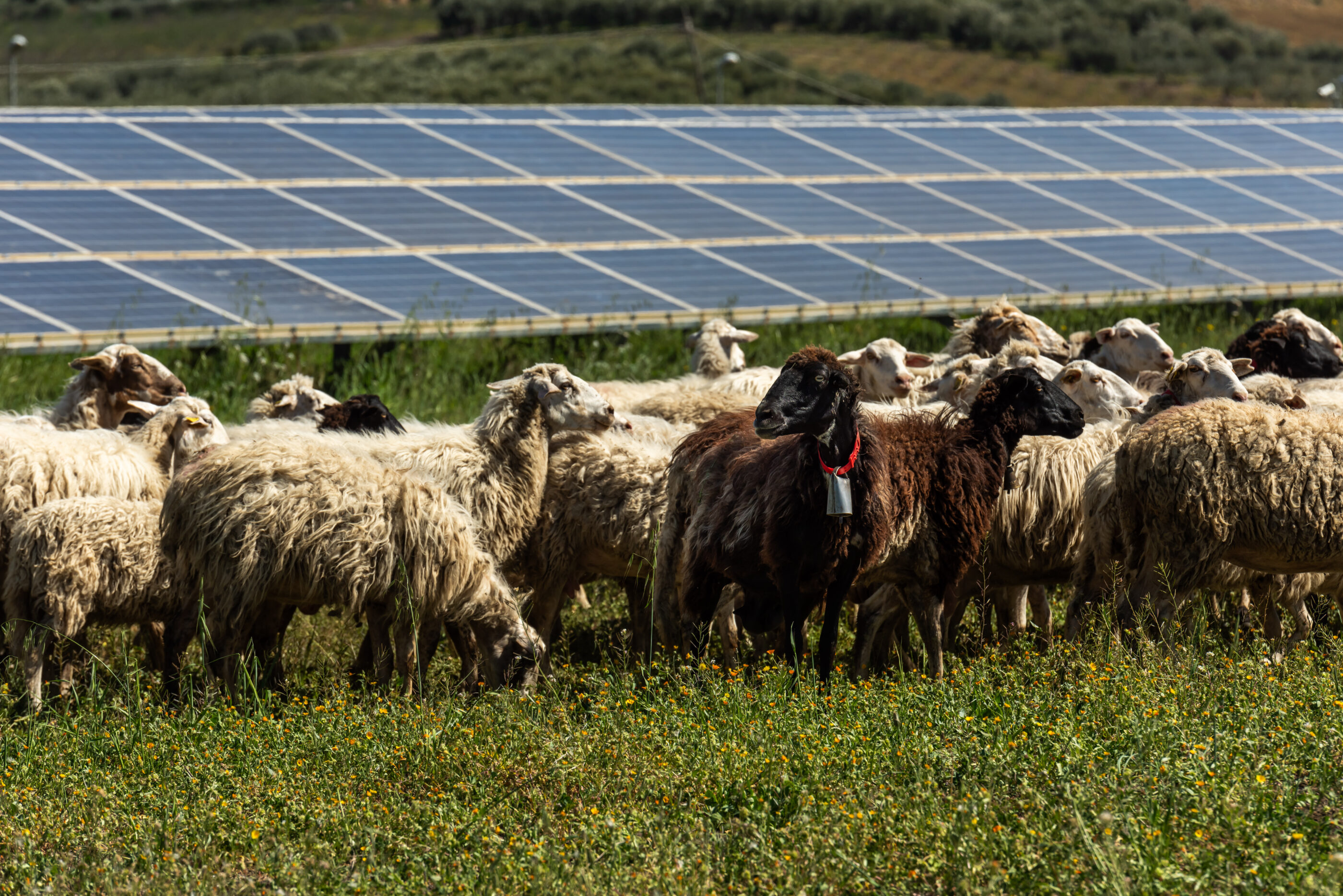
An agrivoltaic farm is an installation that creates a synergy between an agricultural project, which remains central, and energy production. Based on an existing or new farm, project developers jointly define the setup of a farm that combines agricultural and energy production, without the latter adversely affecting the agricultural activity.
In 2023, the law on accelerating the production of renewable energy defined agrivoltaics according to several criteria:
“An installation is considered agrivoltaic if it provides the agricultural plot with at least one of the following services, while ensuring significant agricultural production and generating sustainable income:
1° Improvement of agronomic potential and impact;
2° Adaptation to climate change;
3° Protection against hazards;
4° Improvement of animal welfare.”
The law provides for checks throughout the lifetime of the agrivoltaic farm to ensure the proper agricultural performance of the project.
This type of project is reviewed by State authorities, who assess the quality of the agrivoltaic farm. Based on this review, the Prefect decides whether or not to approve the project. Upstream, we have engaged with the Chamber of Agriculture of Cher, which carried out the agricultural study of the project. It will also be examined by the CDPENAF (Departmental Commission for the Preservation of Natural, Agricultural and Forest Areas), which must issue an opinion.
Stay in touch
If you wish to send us your thoughts on the project or be kept informed of its progress, you can fill in this contact form.
The information provided here is collected solely to process your request regarding this project and is not shared with third parties.
Nadara France
Atrium - Building A (Regus)
2 Rue Claude Chappe
Z.A.C. des Champs-Blancs
35510 Cesson-Sévigné