
Waste or resource - Unlocking the hidden value in decommissioned turbines
For the first time in wind energy’s history, the decommissioning of turbines is becoming business as usual. Yet across the sector, decommissioning is widely framed as a cost to absorb or a compliance hurdle to clear. It’s a mindset that’s leaving significant value on the table as thousands of turbines across Europe approach end-of-life.
Handled well, decommissioning isn’t the end of a turbine’s revenue - there’s one last return on investment: valorisation of the resources left behind. Wind turbines contain thousands of components and large volumes of high-value material, much of which retains value when decommissioned.
When a wind turbine comes down, the owner needs to make a choice: are we managing waste or are we managing resources?
Many wind farms across Europe (and across portfolios) operate turbine models that are no longer manufactured. This means sourcing replacement components can involve long lead times, unpredictable availability, and extended downtime. Waiting weeks or months for a new, refurbished, or second-hand component translates directly into lost revenue.
Within our own organisation, by retaining usable components from decommissioned assets, we can reduce reliance on fragile supply chains, shorten repair timelines, and improve uptime across our portfolio. Of course, components from decommissioned turbines may still require refurbishment, but this is often faster and more economical than sourcing new parts - particularly as Nadara has an ageing fleet of turbines.
Seen through this lens, circular decommissioning is not just about sustainability. It is about building robust supply chains and enhancing operational resilience.
Avoiding disposal costs
As well as value retention or creation, there’s also a straightforward economic upside to recovery: disposal is not free. Recycling, energy recovery, and landfill all carry gate fees, logistics costs and regulatory overheads. By prioritising reuse and repurposing, those costs can often be reduced or avoided entirely. In other words, circularity doesn’t just reduce environmental impact - it changes the cost profile of decommissioning itself.
The traceability opportunity
Decommissioning is one of the moments when scrutiny is highest, particularly at sites being repowered. Communities want to know what happens to turbines once they come down. Are materials reused responsibly? Are they exported elsewhere? Do they end up in landfill?
Without clear answers, confidence erodes, which is why material traceability is central to our approach at Nadara. By analysing assets at the outset of a decommissioning project and embedding data requirements into contractor agreements, we can track where materials go - whether they are reused within our portfolio, repurposed into the community, recycled or otherwise disposed.
This makes it possible to report outcomes clearly and credibly, by material and by mass, and to communicate decommissioning with confidence rather than defensiveness.
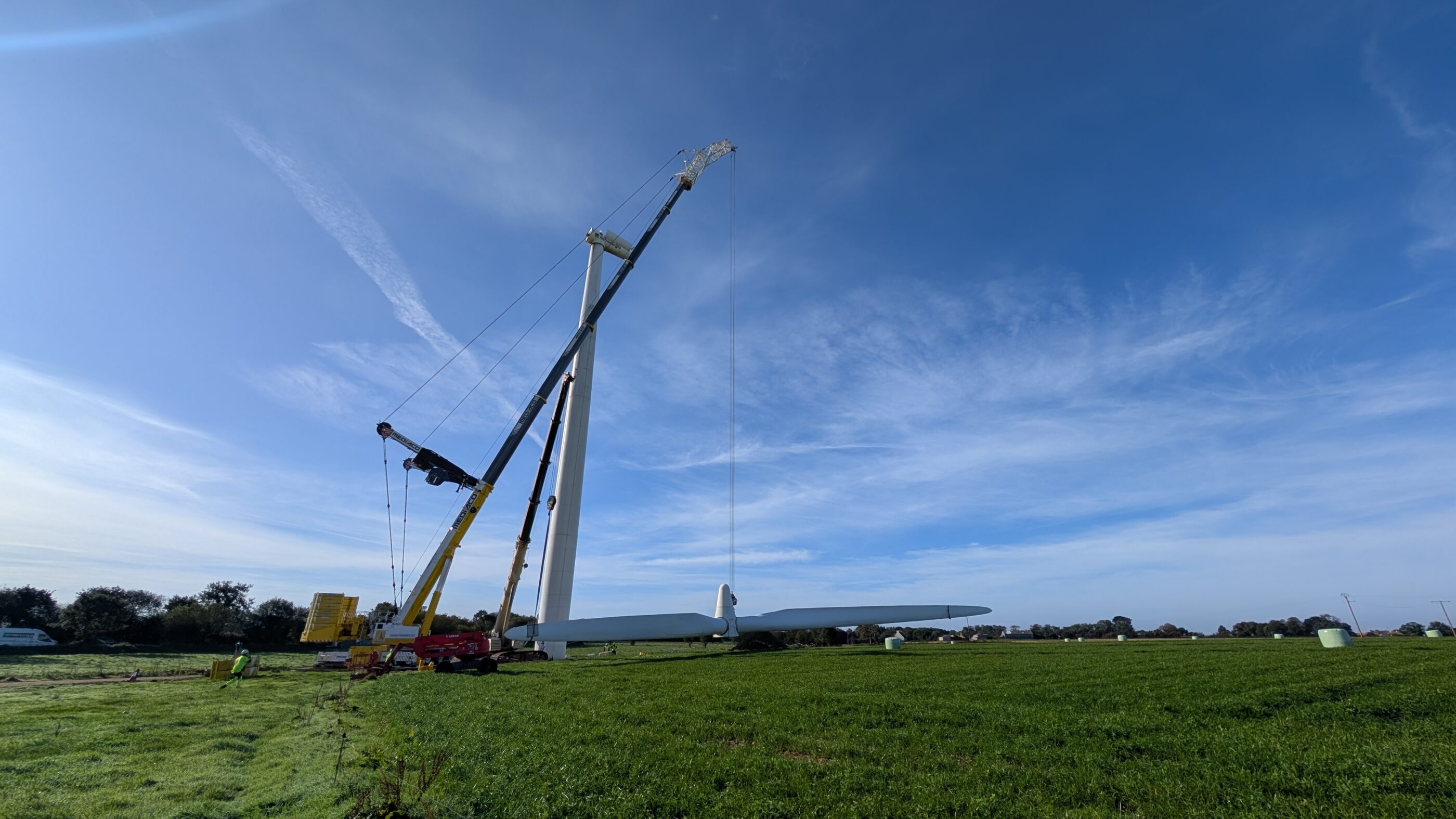
Case study: Plouvien
Choosing to see decommissioned components and materials as a resource rather than waste is already delivering results at Nadara. At our Plouvien wind farm in Northwest France, we recently decommissioned six turbines. Through a circular-first strategy, and in close collaboration with our contractor, we achieved a project recovery rate (reused, repurposed or recycled) of 98% on more than 1,000 tonnes of material, with zero landfill recorded – in alignment with WindEurope’s industry-wide commitment.
As part of this strategy, usable components were retained and redistributed across our wider portfolio, while other materials were repurposed or recycled through local partners, injecting these materials back into the local economy. For our first project of this kind, it demonstrated that circular decommissioning at scale is not only possible: it’s practical and efficient.
Closed-loop circularity
As Nadara’s repowering pipeline grows, decommissioning and construction will increasingly run in parallel. That creates the potential for a closed loop: older projects becoming a source of components, materials, and learnings for newer ones.
Over time, this approach can reduce reliance on virgin materials, lower operational risk, and divert value into local communities. In our eyes, the ambition for the wind sector